

In a world where capturing the perfect moment is an art form, selfie sticks have become the unsung heroes of photography. Gone are the days of awkward arm stretches and the dreaded half-head syndrome. With a selfie stick in hand, anyone can transform into a master of angles and lighting, all while maintaining a sense of style—because who doesn’t want to look fabulous while posing for the ‘Gram?
What Are Selfie Sticks?
Selfie sticks are extendable devices that hold smartphones and cameras for easier photography. Designed to enhance self-portraiture, they enable users to capture wider shots and include more background in their images. Functionality varies, often incorporating Bluetooth technology for remote shutter control.
Materials commonly used include lightweight aluminum or durable plastic, making them portable for travel. Most selfie sticks feature adjustable angles, ensuring optimal positioning for various types of selfies. Ease of use contributes to their popularity; one can simply extend the stick, place the device, and capture the moment.
Different models cater to specific needs, such as compact designs for minimalists or tripod features for stability. Some boast additional functions like integrated ring lights for better illumination during low-light conditions. Popularity increased with the rise of social media platforms, where visually appealing content drives engagement.
Safety features, such as wrist straps, prevent accidental drops, adding a layer of reliability. With a range of styles and colors available, users often choose selfie sticks that align with their personal aesthetics. Retail prices typically range from $10 to $50, offering options for varying budgets.
Often viewed as essential accessories for travelers, events, and gatherings, selfie sticks elevate the selfie-taking experience. Their convenience and versatility support creativity in photography, allowing for exploration of unique angles and compositions.
Benefits of Using Selfie Sticks
Selfie sticks offer valuable advantages for capturing memorable moments. They enhance photo quality, flexibility, and creativity.
Enhanced Group Photos
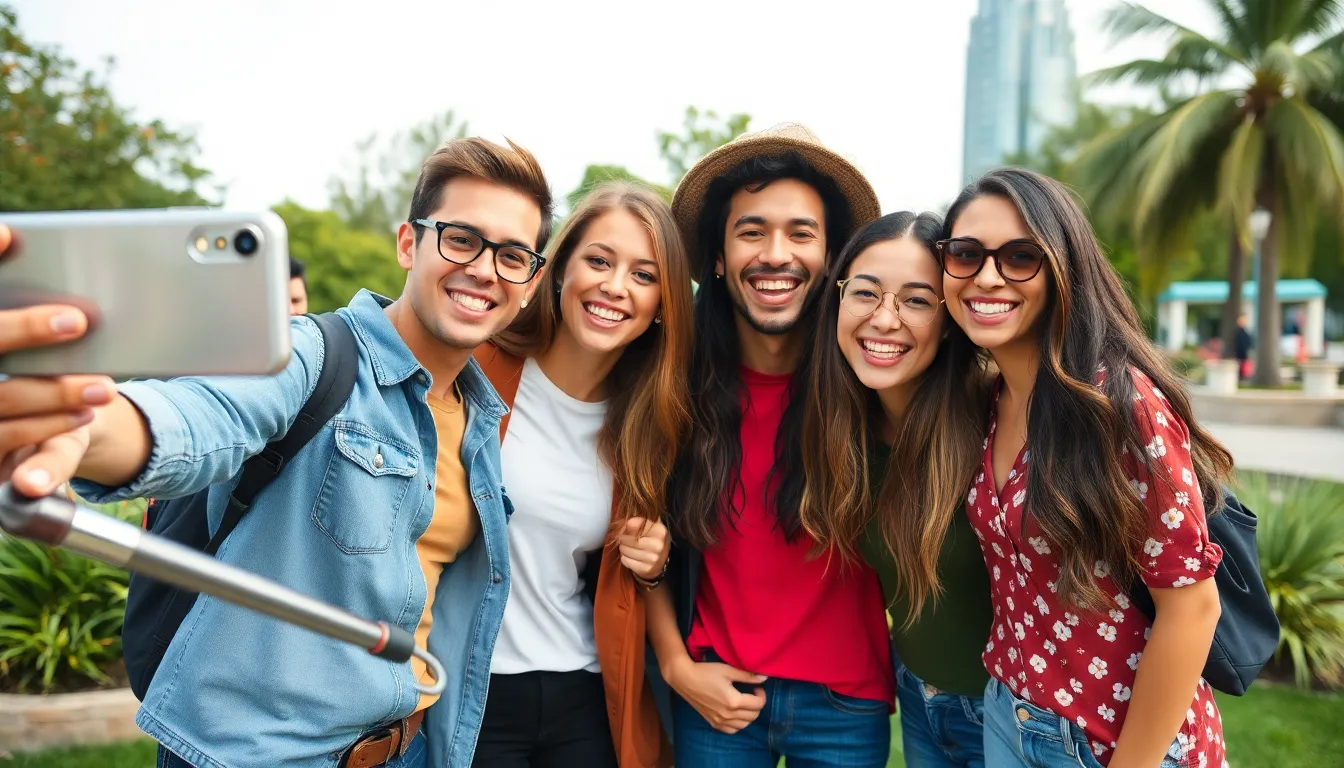
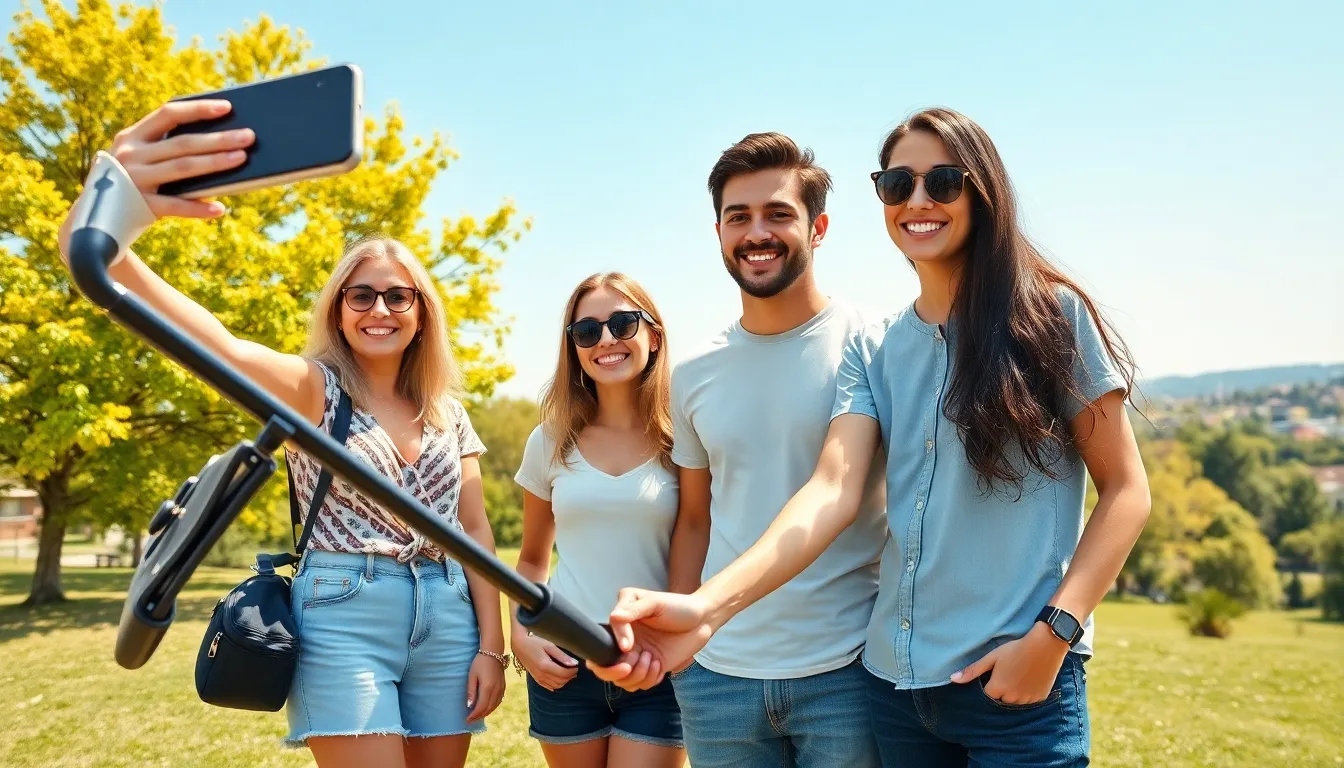
Selfie sticks simplify group photos, allowing everyone to fit into one frame. Increased distance captures more faces and backgrounds, resulting in balanced compositions. Many users find it easier to coordinate poses when extending the stick. Users can also incorporate scenic backdrops and reduce the need for awkward cropping later. A higher vantage point can eliminate obscured faces and create engaging visuals. Friends at events and family members on vacations benefit from these features. The added reach transforms ordinary pictures into impressive group portraits.
Improved Angles and Perspectives
Selfie sticks enable better angles and unique perspectives, elevating any photo session. Extended length allows users to capture stunning landscapes or intricate architectural features. Adjusting the angle adds depth to images, creating a sense of dimension. Users unlock creative potentials, transforming standard selfies into artistic shots. The ability to position the camera above one’s head or at various heights enriches the overall composition. These tools foster experimentation, so users can discover new photography styles. Photographers and casual users alike appreciate the versatility they offer, cultivating memorable and share-worthy images.
Types of Selfie Sticks
Selfie sticks vary significantly, catering to diverse user preferences and requirements. Two primary categories include Bluetooth and wired selfie sticks.
Bluetooth Selfie Sticks
Bluetooth selfie sticks emerge as popular options for seamless operation. These selfie sticks connect to smartphones via Bluetooth technology, enabling users to capture photos remotely using a button on the handle. Common models often support various devices, ensuring compatibility with most smartphones. Many also feature adjustable lengths, offering flexibility for different shooting angles. With the ability to quickly connect and start shooting, Bluetooth selfie sticks simplify the photography process, making them favorites among social media enthusiasts. In addition to these essential features, they frequently include tripod capabilities for enhanced stability.
Wired Selfie Sticks
Wired selfie sticks remain reliable alternatives for users preferring straightforward functionality. These sticks usually consist of a sturdy pole connected to a headphone jack for direct camera shutter control. Users appreciate their budget-friendly nature, as wired models often cost less than their Bluetooth counterparts. Unlike Bluetooth options, wired selfie sticks don’t require charging, making them convenient for those on the go. Additionally, their simplicity in design ensures ease of use, appealing to users who desire no-frills photography. Although they might lack some advanced features, wired selfie sticks effectively capture selfies and group shots with minimal fuss.
Tips for Choosing the Right Selfie Stick
Selecting the right selfie stick enhances the overall photography experience. Key factors include compatibility with devices and portability.
Compatibility with Devices
Different selfie sticks cater to various devices. Bluetooth models support smartphones, action cameras, and some digital cameras, giving flexibility in usage. Users should check if a stick works with specific devices, especially if they plan to switch models. Wired versions also connect easily to devices with a headphone jack. Compatibility ensures users avoid issues during crucial moments, capturing photos effortlessly.
Portability and Weight
Portability plays a significant role in choosing a selfie stick. Lightweight materials like aluminum or durable plastic ensure ease of transport. Most selfie sticks weigh between 200 to 300 grams, making them suitable for carrying in bags or pockets. Compact designs fold down to a manageable size, enhancing convenience for travelers. Consideration of these factors ensures users enjoy photography without the burden of cumbersome equipment.