


In a world where robots might soon outsmart their creators, the marriage of AI and robotics is turning heads—and not just because they can now do the robot dance. These technological marvels are no longer confined to sci-fi movies or the occasional awkward dinner party. Instead, they’re reshaping industries, enhancing lives, and even making breakfast (well, almost).
Overview of AI and Robotics
AI and robotics intersect in remarkable ways, reshaping industries and daily life. These technologies increasingly integrate to create systems that can operate autonomously and intelligently.
Definition of AI
Artificial intelligence refers to computer systems designed to perform tasks that typically require human intelligence. These tasks include speech recognition, decision-making, and problem-solving. AI systems can analyze large data sets and learn from patterns. Machine learning, a subset of AI, emphasizes training algorithms to improve performance over time. Natural language processing enables machines to understand and execute human language. AI applications span healthcare, finance, and transportation, showcasing far-reaching impact across sectors.
Definition of Robotics
Robotics encompasses the design, construction, and operation of robots. Robots are machines that can carry out specific tasks either autonomously or under human control. They often incorporate sensors, actuators, and AI to enhance functionality. Industrial robots often perform repetitive tasks in manufacturing settings, increasing efficiency. In contrast, service robots assist individuals in everyday environments, such as homes and hospitals. Moreover, advancements in robotics include collaborative robots, known as cobots, which work alongside humans to improve workflows.
Applications of AI and Robotics
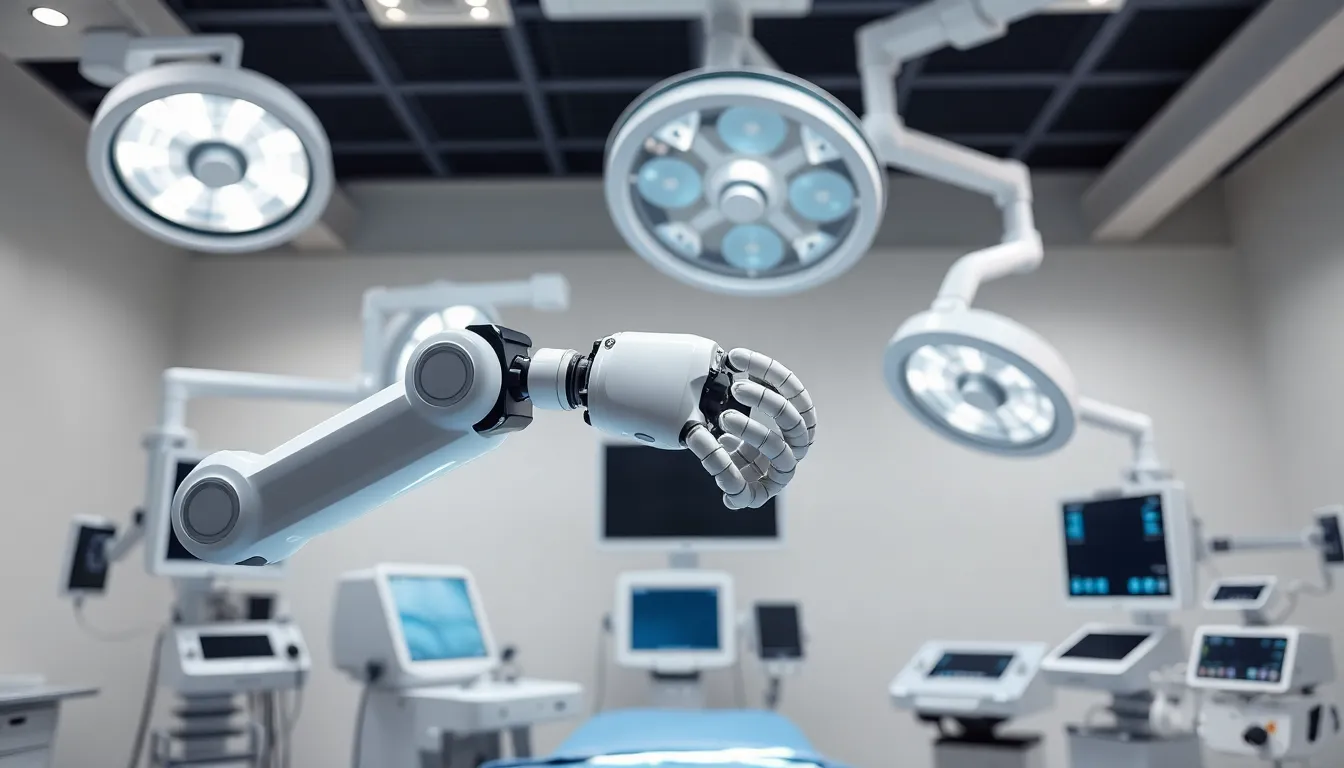
AI and robotics find extensive applications across various industries, enhancing efficiency and productivity.
Healthcare Innovations
Innovative AI algorithms assist in diagnosing diseases, predicting patient outcomes, and personalizing treatment plans. Robotic systems perform surgeries with precision, reducing recovery times and minimizing incisions. Technologies like robotic exoskeletons help individuals regain mobility, showcasing their impact on rehabilitation. Furthermore, AI-powered chatbots provide immediate patient assistance, streamlining communication between healthcare providers and patients. The integration of AI analytics enables healthcare professionals to analyze large datasets for improved decision-making.
Industrial Automation
In manufacturing, robotics automate repetitive tasks, which boosts productivity and reduces human error. AI analyzes production line data to optimize workflows and maintenance schedules, enhancing overall efficiency. Collaborative robots, known as cobots, work alongside human operators, improving safety and flexibility in various applications. Furthermore, predictive analytics help identify potential equipment failures before they occur, minimizing downtime and maintenance costs. This synergy between AI and robotics revolutionizes industrial processes and supports sustainable development.
Autonomous Vehicles
AI drives the development of autonomous vehicles, enhancing navigation and safety features. Sensors and cameras collect data, allowing the vehicle to identify obstacles and make real-time decisions. Advanced algorithms process this data to improve route planning and traffic management. Testing continues on various platforms, including passenger cars and delivery drones, demonstrating the scope of these innovations. The emphasis on safety and efficiency continues to shape the future of transportation technologies.
Benefits of AI and Robotics
AI and robotics significantly transform industries and improve various aspects of daily life. Their integration leads to remarkable advancements in numerous fields.
Increased Efficiency
Automation reduces time spent on repetitive tasks, allowing human workers to focus on complex challenges. Robotics streamline production lines, enabling quicker output with consistent quality. AI optimizes scheduling and resource allocation, which increases operational performance. In agriculture, robots automate planting and harvesting, boosting yields while minimizing labor costs. The manufacturing sector sees enhanced performance through real-time monitoring, leading to fewer delays. Increased efficiency results in cost savings for businesses and a higher return on investment.
Enhanced Safety
AI and robotics play crucial roles in improving workplace safety. Machines take over dangerous tasks, minimizing human exposure to hazardous environments. In construction, robots handle heavy lifting, reducing the risk of injury. Autonomous vehicles enhance road safety by decreasing the likelihood of accidents through advanced sensors and AI algorithms. Monitoring systems powered by AI detect potential hazards, providing alerts in real time. Enhanced safety measures contribute to a more secure working environment and increased employee satisfaction.
Challenges in AI and Robotics
AI and robotics face significant challenges that impact their development and application across industries. Addressing these issues is crucial for maximizing the potential of these technologies.
Ethical Considerations
Ethical considerations play a vital role in the development of AI and robotics. Developers must address concerns related to privacy, data security, and the potential for bias in AI algorithms. Transparency in decision-making processes is necessary to foster public trust. Additionally, the deployment of autonomous robots raises questions about accountability in case of malfunctions or accidents. Experts advocate for frameworks that establish ethical guidelines for AI usage and robotic applications. Responsible innovation ensures that technology serves humanity rather than undermining it.
Technical Limitations
Technical limitations also present challenges for AI and robotics. Performance constraints often restrict AI’s ability to interpret complex data accurately under various conditions. Robotics relies heavily on sensors and actuators, which can fail or underperform in dynamic environments. Limitations in machine learning models can hinder their effectiveness in real-time applications. Furthermore, energy efficiency remains a significant hurdle for mobile robots, impacting their operational range and effectiveness. Enhancing algorithms and hardware is essential to overcome these challenges and achieve seamless integration across industries.
Future Trends in AI and Robotics
AI and robotics continue to advance and reshape industries, paving the way for innovative applications and opportunities in the future.
Integration of AI in Robotics
AI significantly enhances robotic capabilities, enabling smarter decision-making and improved autonomy. Intelligent algorithms empower robots to adapt to diverse environments, enhancing their ability to perform complex tasks. Machine learning allows robots to analyze data in real time, leading to more efficient operations across sectors. Collaborative robots leverage AI to interact safely with human workers, fostering seamless integration in manufacturing. These advancements represent a shift towards autonomously operating systems, fundamentally transforming how industries function.
Impact on Employment
The rise of AI and robotics has a profound impact on employment landscapes. Automation streamlines repetitive tasks, prompting some job roles to evolve or diminish. Yet, the demand for skilled workers to develop and maintain these technologies increases. As industries adopt AI-driven systems, employees will focus on higher-level problem-solving and innovation. Research indicates that while some jobs may vanish, new opportunities will arise in tech-focused fields. Adapting education and training programs to these changes is crucial for workforce readiness.
Conclusion
AI and robotics are transforming industries and enhancing daily life in ways previously thought impossible. Their integration is not just about efficiency but also about creating smarter systems that adapt to human needs. As these technologies evolve the potential for innovation grows, paving the way for groundbreaking applications across various sectors.
While challenges remain in ethics and technical limitations, the ongoing advancements promise a future where AI and robotics work harmoniously alongside humans. This partnership not only boosts productivity but also fosters a safer working environment. As society navigates this transition, the focus on education and skill development will be crucial in preparing the workforce for the opportunities that lie ahead. The journey of AI and robotics is just beginning, and its impact will be profound and far-reaching.